For serious capital to move on-chain at scale, privacy can't be a single feature or a niche workaround - it has to be the default.
That conviction shaped Hinkal from day one.
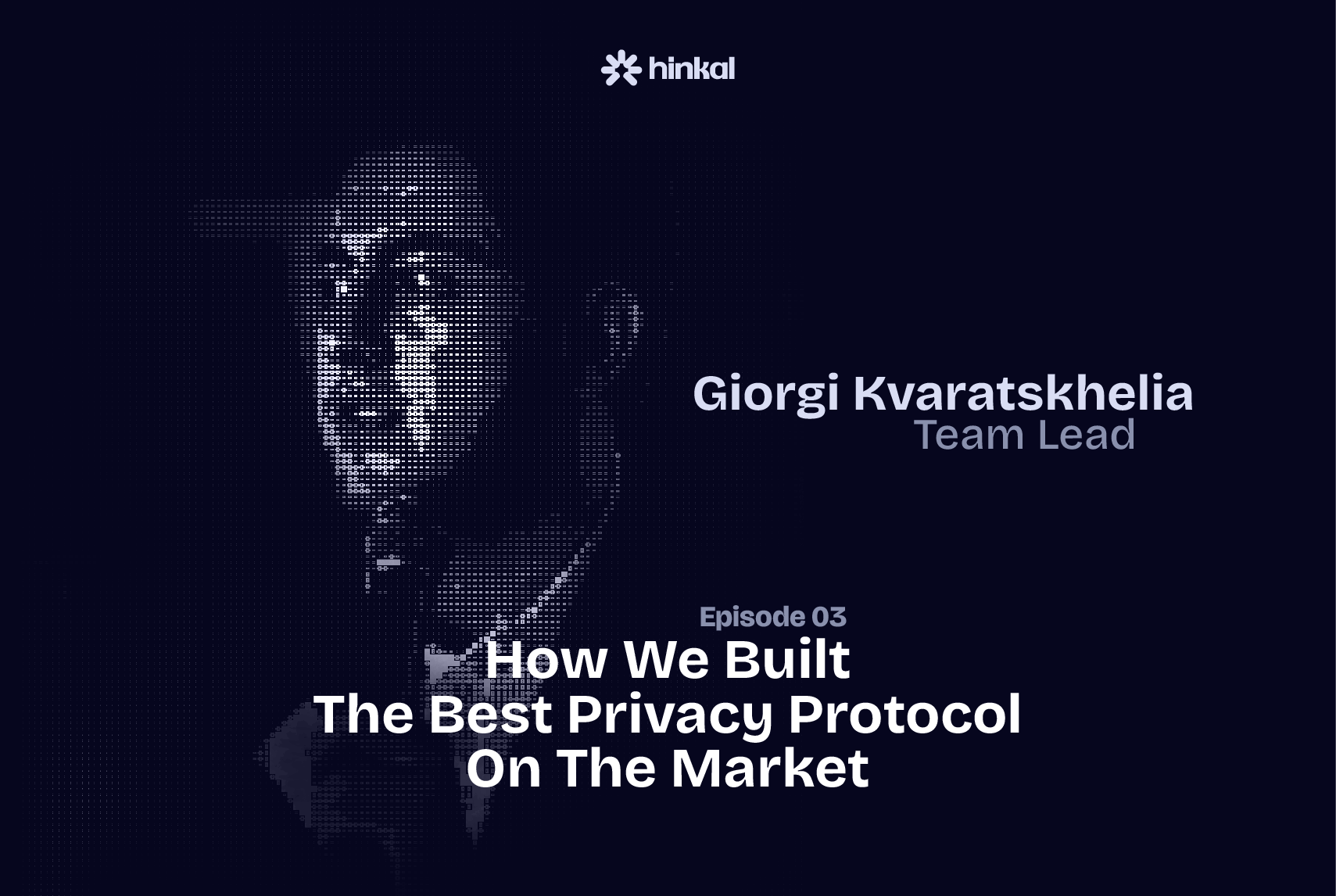
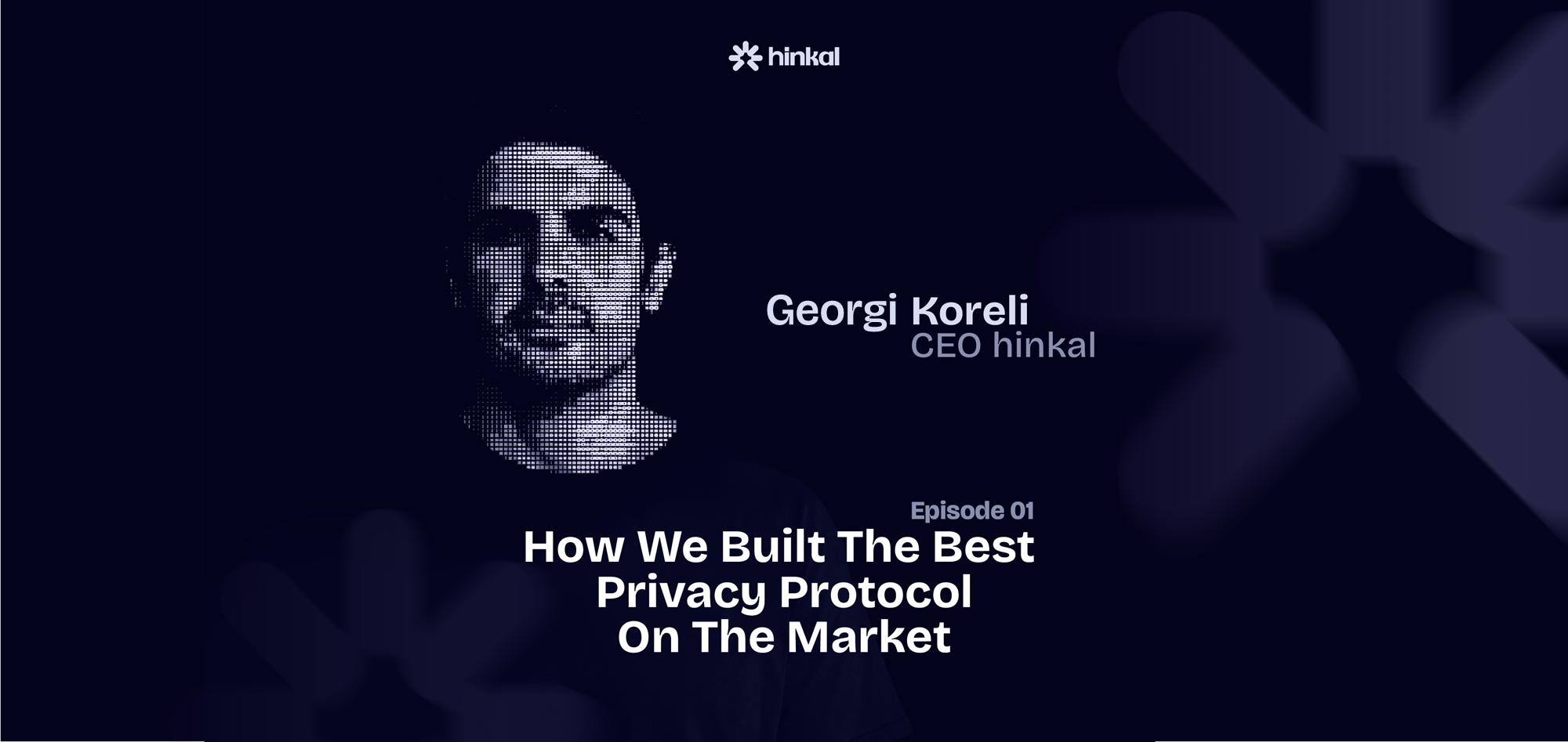
Today opens:
How We Built The Best Privacy Protocol On The Market
Signature series, Episode 01:
Smart Contract Architecture
For most of crypto, privacy was built for the few.
When we first looked at blockchain privacy, most products served a niche audience - people who came to crypto to escape surveillance.
That community matters.
But it's not the audience that drives adoption at scale.
That audience is institutional. Treasuries, funds, corporations. People who operate inside financial systems where privacy isn't a feature - it's the baseline.
The Protocol We Set Out To Build.
So we asked the question that became the foundational principle behind every line of our smart contract:
What if privacy wasn't a niche product, but the default property of how on-chain settlement works?
That's the protocol we set out to build.
Conviction doesn't earn credibility
But we also understood something early:
Institutional adoption does not come from promises. It comes from infrastructure that behaves predictably under pressure.
Privacy systems cannot depend on whether an operator behaves correctly. They cannot depend on whether internal permissions are configured properly. They cannot depend on whether sensitive financial data stays contained inside an organization.
The guarantees have to exist at the protocol level.
That is why Hinkal's architecture is externally verifiable, auditable, and already deployed across Ethereum, Solana, and TRON. Institutions evaluate the system directly. They do not rely on opaque infrastructure claims.
Privacy Should Not Introduce Additional Custodial Exposure
The first architectural decision we made was simple:
Users should not have to give up control of assets in order to gain transactional confidentiality.
Inside Hinkal, users keep their own wallets, keys, and funds throughout the lifecycle of every transaction.
The private key is generated from a signature of the wallet the user already uses. Never created by us. Never stored by us.
The viewing key - which decrypts the user's own transaction history - is derived from that private key locally.
None of it ever exists on Hinkal's infrastructure.
Hinkal as an entity has no special access. We cannot see user funds. We cannot move them. We cannot produce records we do not have.
Independent Layers, Independent Audits
For privacy infrastructure to operate in real financial environments, reliability matters as much as confidentiality.
A single contract that does everything was the wrong shape. So we separated the protocol into distinct layers with isolated responsibilities.
- Verify - validates every transaction.
- Record - stores encrypted state.
- Run - executes user actions.
- Enforce - applies operational rules.
A flaw in one layer does not compromise the others.
Each layer is independently reviewed. Independently tested. Independently upgraded. Independently audited. The same architectural principle serious financial infrastructure has relied on for decades.
Privacy From Math, Not From Operators
Privacy can come from one of two places. From an operator who promises to protect your discretion. Or from math that proves a transaction is valid without ever showing what's inside it.
For us, there were never two options.
Institutional-scale blockchain infrastructure requires guarantees that remain consistent regardless of who operates the system.
Inside Hinkal, transaction validity is enforced cryptographically through zero-knowledge proofs - without exposing counterparties, balances, or transaction amounts on-chain.
Confidentiality is not dependent on internal discretion.
The protocol itself enforces it.
The Cryptography We Use
Battle-tested. Audited at scale.
The cryptographic stack behind Hinkal was selected with one priority in mind:
Production reliability.
- Groth16 - verifies validity without exposing transaction data.
- Poseidon - hash function optimized for zero-knowledge systems.
- Baby Jubjub - elliptic curve optimized for efficient private computation.
Not experimental components. Established primitives, already used across the zero-knowledge ecosystem to secure large-scale public blockchain infrastructure and billions of dollars in value.
Each pillar reinforces the others.
The real challenge was never solving one problem in isolation.
The challenge was designing a system where confidentiality, operational integrity, and non-custodial control reinforce each other simultaneously.
Cryptography provides confidentiality.
The layered architecture isolates operational risk.
The non-custodial design removes unnecessary asset exposure.
None of those pillars works alone. The system only works because they were engineered together from the beginning.
Math · Layered · Non-custodial. Each pillar reinforces the others.
What's next
This is the foundational architecture we built with one goal in mind: to make privacy default across the blockchain ecosystem, driving institutional adoption at scale.
Every episode that follows opens another layer of the system: the cryptography, the multi-chain architecture, the compliance framework, and the infrastructure decisions behind them.
Next Wednesday - episode 02, Under-the-hood: ZK Foundations.




















































.png)
.png)


.webp)