TRON has become one of the largest stablecoin settlement networks, processing billions in volume across payments, treasury flows, and on-chain financial operations. Until now, all of that activity has been fully transparent.
Every transaction reveals:
- who sent funds
- who received them
- how much was transferred
With Hinkal Pay, that is no longer the case.
[[KEY_TAKEAWAYS]]
The Problem with Transparent Payments
Transparency is useful for verification. But for businesses, it creates a structural disadvantage.
When a payment is made on-chain:
- Counterparties can see total holdings, revenue, and wallet balance of your business
- They can analyze transaction history
- They can infer payout patterns and operational behavior
Over time, this creates real consequences:
- Vendors understand your pricing flexibility
- Partners gain negotiation leverage
- Competitors can map your activity and strategy
This is not a theoretical issue - it directly affects how businesses scale.
What Hinkal Changes
Hinkal Pay introduces a different execution model.
Instead of sending funds directly between public wallets:
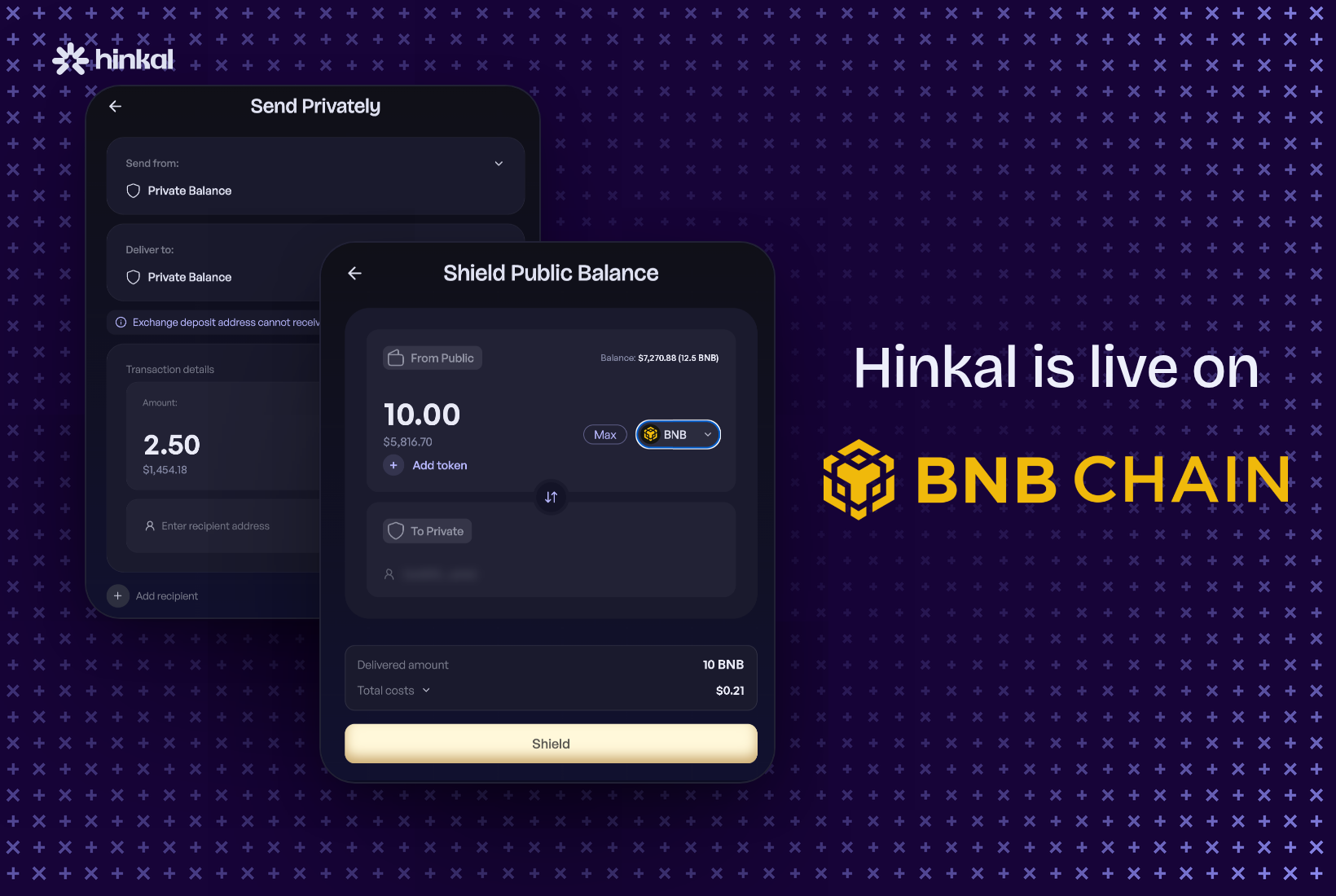
- funds are deposited into a private balance
- that balance is controlled by the user’s existing wallet
- payments are executed from that balance
As a result:
- Sender is not publicly visible
- Recipient is not publicly visible
- Amount is not publicly visible
Why This Matters for TRON
TRON is already one of the most widely used networks for stablecoin payments.
But high-volume usage also increases exposure.
As more businesses operate on-chain:
- transaction transparency becomes a competitive risk
- financial activity becomes easier to analyze
- operational strategies become easier to reverse-engineer
Adding private execution changes what TRON can support. It enables businesses to use the network for real financial operations - not just transfers, but structured payment flows, treasury management, and settlement - without exposing sensitive financial data.
Compliance and Controls
This is not about removing visibility entirely.
It is about controlling it.
Hinkal Pay is built for environments where compliance is required:
- Chainalysis KYT monitoring is enforced
- Flagged or high-risk addresses are prevented from interacting with the system
- Viewing keys allow selective disclosure for audit and reporting
Financial activity is not publicly exposed by default, but can still be verified when required.
No Changes to Existing Infrastructure
- No new wallets
- No custody changes
- Same TRON assets and settlement rails
Hinkal integrates into existing workflows without requiring migration.
Part of a Multi-Chain Environment
This is not limited to TRON.
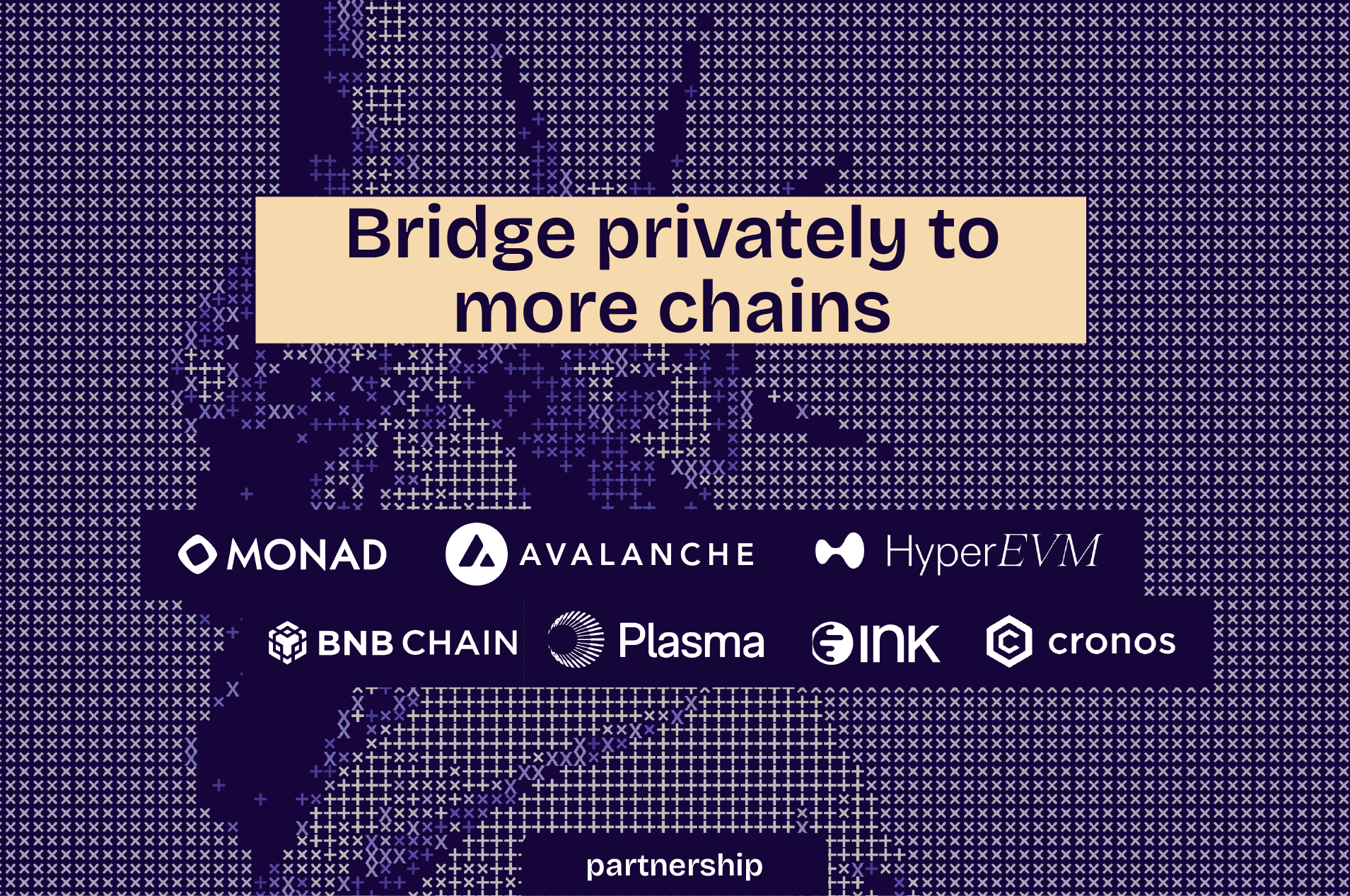
Hinkal already operates across: Ethereum, Solana, and major EVM networks
The goal is a unified execution where businesses can operate on public blockchains without exposing financial activity.
[[SUPPORTED_NETWORKS]]
Adoption and Ecosystem Support
Hinkal is already used across wallets, payment infrastructure, and execution systems.
$400M+ in confidential volume has been processed
6x Audited
Trusted by industry leaders
Ecosystem and partner alignment includes:
- MPCVault
- Rubic
- Khalani
- Psalion
- Request
- Omypayments
- Aquanow
[[TRUSTED_BY]]
What This Unlocks
- Payment processors
- Trading firms
- Treasury systems
- Enterprises operating on-chain
For these users, private execution is not optional - it is required for operating at scale.
TRON is already one of the largest settlement layers in crypto.
With Hinkal Pay, it becomes usable for financial operations that require controlled visibility.
This is a shift from transparent transactions to controlled execution - without losing verifiability or compliance.
Trusted by teams building on public chains

























































.png)
.png)









.webp)